
Hardware prices Q4 2026 and Q1 2027
Hardware prices have risen enormously this year. The why and what we expect in the period ahead.
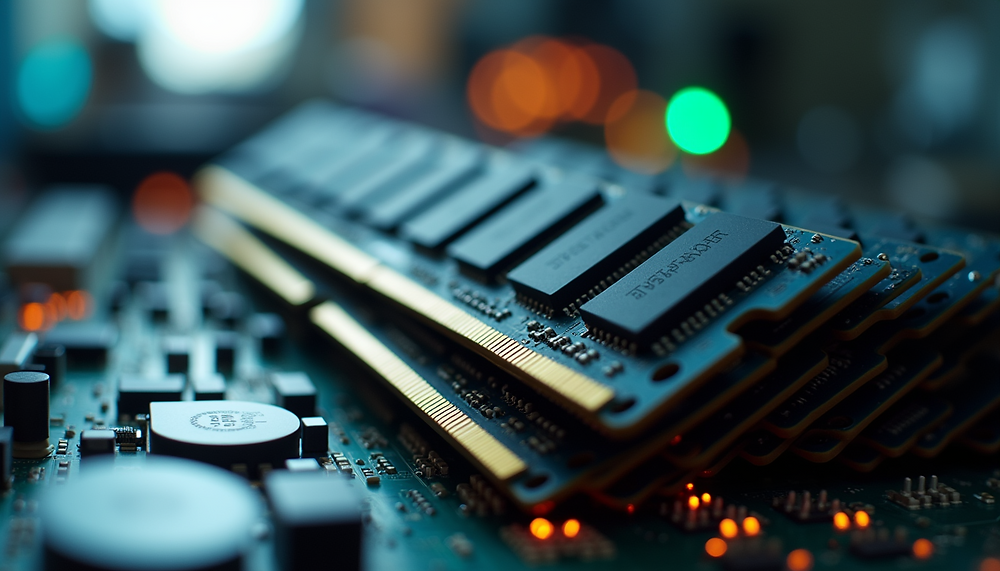
If you’ve requested a quote from us this year and it turned out considerably higher than last year, you’re not imagining things. The cost of the components in your machine has risen more in the past eighteen months than in the entire decade before — and that’s not down to margin. The increase comes from the AI rollout, particularly in the US, and we expect that in the coming months things won’t get better but worse.
The short version: roughly half of the growth in global wafer capacity for memory now goes to HBM — the specialised memory for AI GPUs. Non-HBM bit production grows at about 15% per year, against demand of nearly 22%. So enormous demand and not enough production. The technical background is in New hardware 2026/2027 — Part 2: Memory.
Why the sector was caught off guard: Micron CEO Sanjay Mehrotra is strikingly direct about the cause: “Certain customers drove pricing significantly down in our industry. In 2023, our prices came down to one-third of what they were.” Memory manufacturers ran negative margins and stopped investing. Then AI demand came along. “Companies were losing money,” he said. “They couldn’t afford it.” Memory is traded on an open market, so that investment backlog ultimately lands with the end user.
Everyone’s doing it: asked about prices, ASUS co-CEO Samson Hu says: “Of course, the pricing increase has to be there. It has already happened across some of the brands globally.” HP CFO Karen Parkhill expects memory and storage to keep rising, “as a percentage of the bill of materials.” And TD Synnex CEO Patrick Zammit describes the supply chain in three words: “It’s changing daily.” The validity of quotes in the industry has dropped from 30 to 15 days (for manufacturer prices); HPE now works with 14 days and reserves the right to adjust the price up until shipping. This is not a Dutch problem but a global one, affecting all computer manufacturers large and small.
Demand is falling while prices rise. Global PC shipments fell 20.1% year-over-year in Q3 2026. Price is no longer set by people buying PCs, but by data centre procurement, which takes memory at virtually any price: TrendForce expects memory to account for more than 60% of investment by the nine largest cloud providers next year.
And then it just sits on the shelf. The parties setting these prices can’t even deploy the hardware yet: Microsoft chief Nadella said in November 2025: “You may actually have a bunch of chips sitting in inventory that I can’t plug in… I don’t have warm shells to plug into.” Building a data centre takes roughly two to four years; a new high-voltage line five to ten. Order first, plan later — and the bill is shared with everyone buying a computer.
And it won’t improve quickly. Samsung’s memory division expects supply constraints to be “more severe in 2027 than 2026,” persisting through 2028. Production lead time is now over three years, and building a new fab takes two to three.
Not everyone agrees — we certainly don’t. Acer chairman Jason Chen argues that memory manufacturers are talking up shortages until 2030 to protect their margins, and expects prices to stabilise in the first half of 2027 and decline afterwards. It’s the most optimistic forecast we’ve seen from a major PC manufacturer. We mention it because it deserves a seat at the table — and because Chen competes with the suppliers he’s describing.
On top of that, tariffs aren’t helping either (and playing war in Iran even less so).
What we do about it: we don’t set component prices — we pay them. A quote from us is a snapshot of the market on the day we draw it up. We can’t predict how prices will develop, not even in the short term, but assume that further increases cannot be ruled out.
Update 24-10-26: Amazon too turns out unable to deploy the GPUs it purchased: “Dark GPUs” at Amazon show the limits of the AI buildout: chips are easy to buy, power is not
“Dark GPUs” is a reference to the fibre-optic mania that led to the dot-com bubble. Just as now, more cable was laid than there was demand for. Only after 20 years were some of those cables actually put to use. In the case of GPUs, that won’t happen — or at least it would be the first time in the history of computer hardware that twenty-year-old chips still find a workplace.