

Adobe Premiere Pro
Ikbenstil Workstations for Adobe Premiere and Adobe's recommended system requirements for Premiere, with the most recent hardware components.
Adobe Premiere Pro Workstations
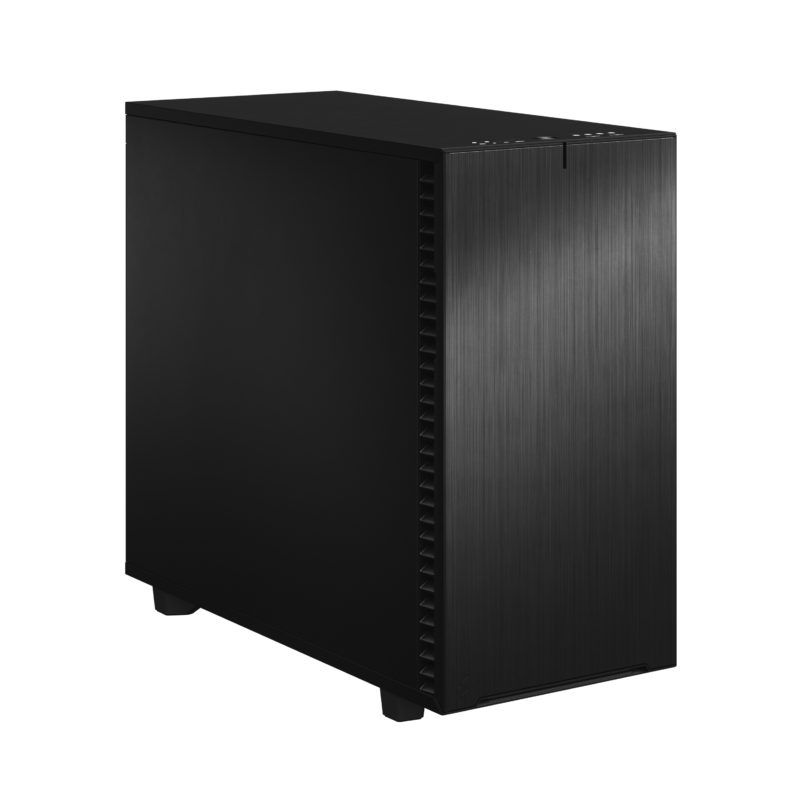
Excellent for compressed files such as H.265 and H.264. Quick sync support
Lots of computing power.
Many PCIe Lanes, lots of RAM and high CPU Core Count, ideal for uncompressed files.
Ideal platform for heavier work, very well expandable with additional GPU and RAM. Perfect for users working with uncompressed files.
Hardware requirements for Adobe Premiere Pro
Recommended system requirements for Adobe Premiere Pro Like most software makers, Adobe also has a list of system requirements for Adobe Premiere Pro, a hardware list that you are advised to meet in order to use the program. This list of recommendations is not a guarantee for an optimally functioning Adobe Premiere Pro workstation, but provides the minimum requirement. The official information provided by software producers is not always up-to-date, and often lags behind hardware development which is progressing at breakneck speed. Therefore, Ikbenstil Computers equips these Adobe Premiere Pro Workstations with the most current and useful and balanced hardware for the program’s operation.
Processor (CPU):
What the best processor is for Adobe Premiere Pro strongly depends on what you will do with it and of course what your budget is. When you work with the H.264 and H.265 (HEVC) video formats, the Intel Core Ultra 9 285K is an excellent choice, thanks to Intel’s built-in fast Quick Sync conversion functionality. If you work with RED R3D camera footage, for example, then AMD’s Threadripper Pro 7975WX and 7995WX are the better choice. More cores make Adobe Premiere Pro faster but to a certain point; when data is processed on a Dual Xeon configuration, this can also become counterproductive.
The graphics card (GPU):
Adobe Premiere Pro is making increasing use of the GPU; it is important to work with a GPU that is recommended by Adobe, but the usefulness of the GPU is determined by the GPU acceleration tools you use in the program. Since Premiere Pro version 14.2, Adobe has added support for GPU-based hardware acceleration when encoding to H.264/H.265, reducing export times by up to 5x. From Premiere Pro 14.5, H.264/HEVC decoding (for live streaming) can now also use the GPU. When using GPU acceleration effects, the NVIDIA GeForce RTX 5080 16GB is a solid choice. The more expensive RTX 5090 with 32GB is the fastest choice. We use a standard Nvidia graphics card by default, which offers more computing power and VRAM at lower cost compared to Nvidia’s Professional series. 10-bit display support The only way to get 10-bit display support is by using a video monitoring card. We recommend the Blackmagic Decklink Mini Monitor 4K and the Studio 4K 6G-SDI PCIe card for this. These cards are specially designed to deliver unchanged video signals to your monitor, resulting in the best possible video and colour quality. You will then need a very accurate screen that can handle the FPS and resolution.
Memory (RAM):
Adobe recommends a minimum of 16GB of RAM; in our Adobe Premiere Pro Workstations we recommend at least 64GB if you work with 1080p files, 96GB for 4K resolutions, and at 6k or 8k and above at least 128GB. It is also important to include the other programs you use alongside Adobe Premiere Pro in your total calculation.
Storage:
Storage is an aspect that is often overlooked in video editing. The CPU or graphics card may do all the processing, but if your storage can’t keep up, it doesn’t matter how fast those components are. What makes storage complicated is the fact that you’re not only dealing with the different types of disks available today, but you also want to configure them to deliver maximum performance in Adobe Premiere Pro. We recommend a configuration with at least three NVMe SSDs: for the operating system and programs, a fast primary NVMe SSD. And for ongoing projects a secondary NVMe SSD, and Premiere Pro also works with a media cache and scratch disk, this then becomes the tertiary NVMe SSD, giving your processing in Adobe Premiere Pro a boost. Of course, storage for content is also needed, this can be on a regular SATA SSD or optionally large volume HDDs, file server or NAS.
Audio:
Modern mainboards have good audio functionalities, but because the audio chip is on the mainboard, it can be disrupted by other processes, resulting in audible unwanted effects. Our advice is to use an external DAC; this gives an enormous improvement, for example the M-Audio Super DAC.
Custom build:
Ikbenstil Computers makes custom Premiere Workstations. In consultation with the user, we look at how the computer is actually used and adapt the hardware for an optimal working experience. This means you receive a computer that exactly matches your use. If your choice is not included here, you can contact one of our specialists, who can offer you a custom solution.
Hardware requirements Premiere Pro according to Adobe: